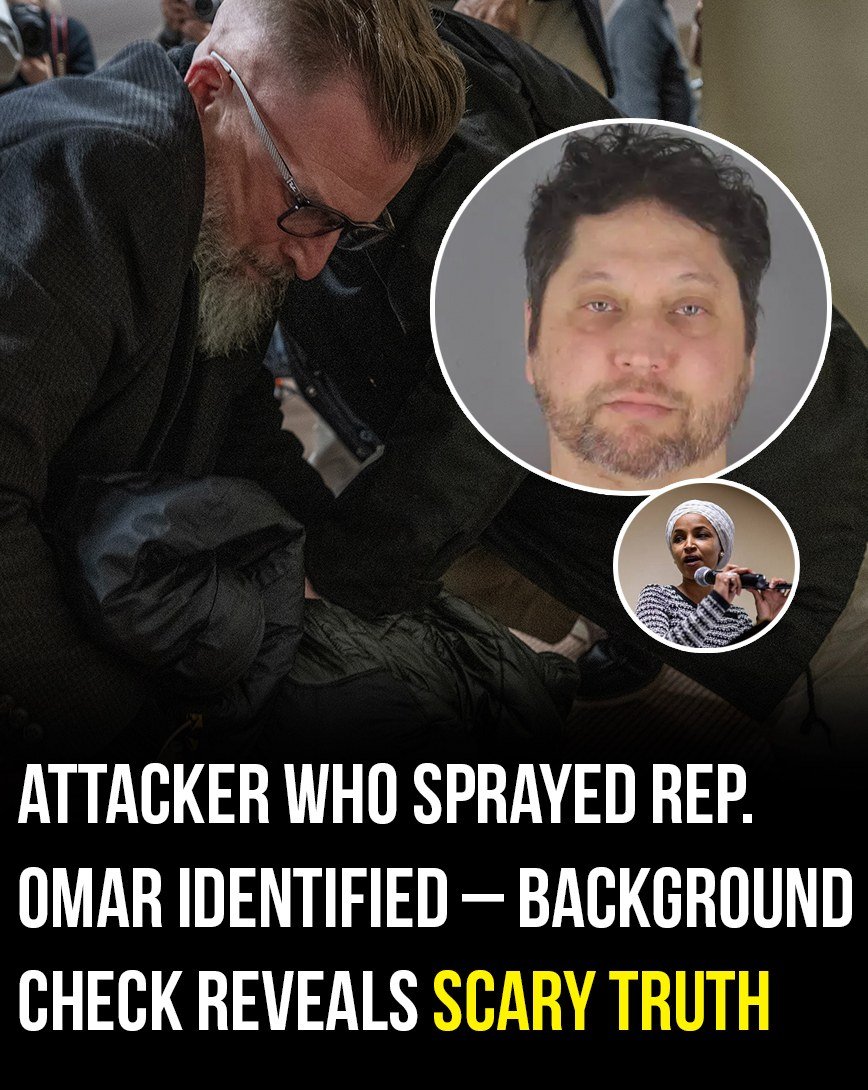

Man Who Attacked Rep. Omar Identified — Background Reveals Alarming Details
U.S. Representative Ilhan Omar was the target of a disturbing assault during a public town hall meeting in Minneapolis, Minnesota, raising renewed concerns about the safety of elected officials in today’s tense political climate.
The incident occurred as Omar was speaking with constituents about immigration policy and the impact of federal enforcement actions on families. The attack unfolded in front of attendees and media, turning a routine civic event into a moment of alarm.
According to authorities, a 55-year-old man approached the stage and sprayed Representative Omar with a liquid from a large syringe before being quickly subdued by security and arrested. Witnesses reported a strong vinegar-like odor, prompting hazmat teams to investigate. Officials later confirmed the substance was not hazardous. Omar declined medical treatment and returned to the stage to finish her remarks, emphasizing that intimidation would not silence her public service.
The suspect, Anthony Kazmierczak, was charged with third-degree assault and remains in custody as the investigation continues. Law enforcement is reviewing his background, which includes past legal troubles and political commentary posted online. While authorities have not officially confirmed a political motive, they are examining whether the attack was influenced by broader political rhetoric and online radicalization.
Representative Omar addressed the incident by highlighting the growing threats faced by lawmakers, particularly women and minority officials. She pointed to years of inflammatory rhetoric and repeated threats directed at her, noting that hostile language can translate into real-world danger. Other members of Congress echoed these concerns, warning that violence against public servants undermines democratic engagement and discourages open dialogue.
Despite the attack, Representative Omar has reaffirmed her commitment to serving her constituents and continuing her work without fear. Authorities are strengthening security measures and pursuing accountability through the legal system, reinforcing the message that violence has no place in civic life.
The incident, while troubling, also demonstrates resilience—both from a public official who refused to be intimidated and from institutions working to protect democratic participation. Readers can take reassurance in knowing the situation is under investigation, safeguards are being reviewed, and the principles of peaceful civic engagement remain firmly upheld.