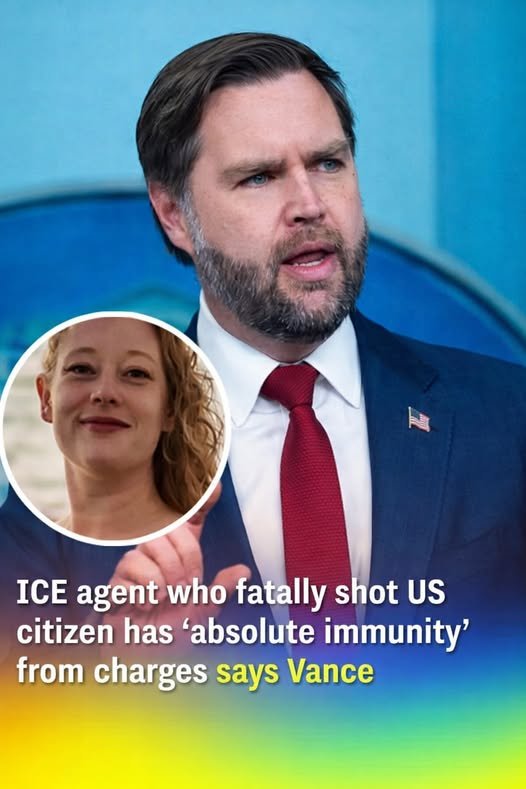

ICE Officer Who Shot a U.S. Citizen Is Considered Immune From Charges Under Federal Law
Vice President JD Vance has stated that the ICE agent involved in the death of 37-year-old Renee Nicole Good in Minnesota will not face criminal charges, a declaration that has ignited a national debate over federal immunity, law-enforcement accountability, and the limits of state authority.
Speaking to reporters, Vance argued that the agent is protected by “absolute immunity,” a legal doctrine shielding federal officers from prosecution when acting within the scope of their official duties. According to Vance, the agent was “doing his job,” and any effort by Minnesota officials to pursue charges would be legally invalid under federal jurisdiction.
The decision has drawn sharp criticism from Minnesota state officials, particularly after the Minnesota Bureau of Criminal Apprehension (BCA) revealed it was barred from participating in the investigation. Superintendent Drew Evans confirmed that the U.S. attorney’s office denied the state access to key evidence, including surveillance footage, witness interviews, and independent forensic review, leaving the FBI with exclusive control. State leaders described the restriction as highly unusual, arguing that the lack of state involvement undermines transparency and public confidence in the investigative process.

Federal authorities, including the Department of Homeland Security, have maintained that the incident was a legitimate law-enforcement action, asserting that Good “weaponized her vehicle” and describing the encounter as a domestic-terrorism-related threat. Former President Donald Trump echoed this assessment publicly. However, Minneapolis Mayor Jacob Frey and several local officials have disputed that characterization, calling the agent’s actions reckless and questioning whether lethal force was justified. They have called for an independent review, citing discrepancies between federal statements, eyewitness accounts, and preliminary evidence.
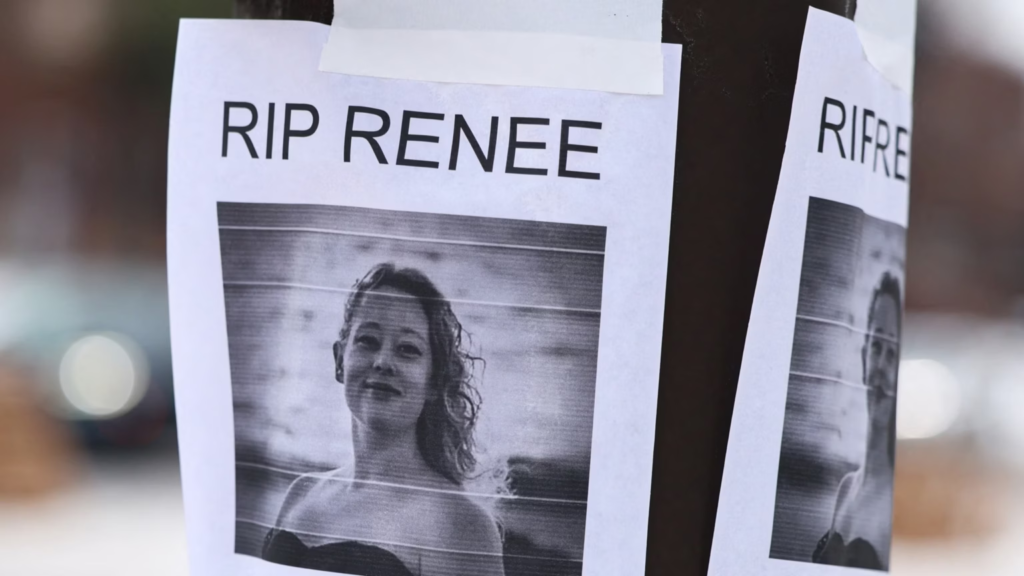
Legal experts note that while absolute immunity is a well-established principle meant to allow federal officers to act decisively without fear of constant prosecution, it is not without limits. Immunity generally applies only when officers act lawfully, follow protocol, and avoid gross negligence or intentional misconduct. The case has therefore become a focal point in broader legal and policy discussions about where the boundary lies between necessary operational protection and meaningful accountability, especially in incidents involving civilian deaths.
Ultimately, the case of Renee Nicole Good reflects a deeper national challenge: balancing federal authority with public trust, officer safety with civilian accountability, and legal doctrine with community confidence. While investigations continue under federal oversight, the widespread public response underscores a shared desire for transparency, fairness, and clarity. Regardless of differing viewpoints, the broader takeaway remains clear—strong institutions depend not only on lawful authority, but on open processes that reassure communities that justice, accountability, and human dignity remain central to the system.