
A librarian from Ripley, West Virginia, has been arrested after authorities alleged that a social media post crossed the legal line from political commentary into a criminal threat. The case has attracted national attention because it involves an alleged threat against a former U.S. president and raises broader questions about online speech, public safety, and the limits of free expression.
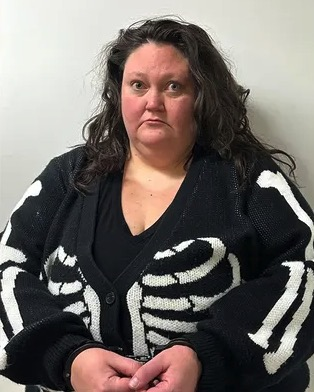
The woman identified by law enforcement is Morgan L. Morrow, 39, an employee of the Jackson County Public Library. According to the Jackson County Sheriff’s Department, Morrow was arrested on January 25, 2026, and charged with one count of making a terroristic threat. Investigators say the charge stems from a video posted on Instagram and TikTok that included language authorities interpreted as encouraging violence against former President Donald J. Trump.
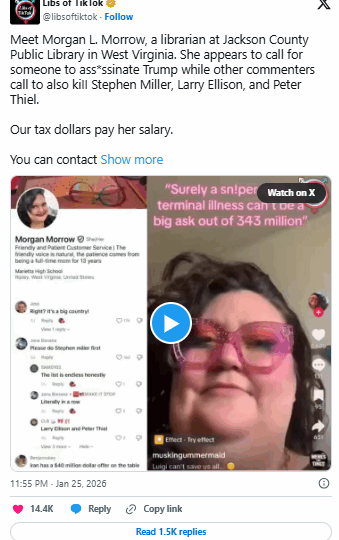
Sheriff Ross H. Mellinger stated that deputies viewed the post as a potential attempt to recruit others to commit violence, even though Morrow allegedly told investigators she did not intend to personally harm anyone. Under West Virginia law, officials explained, a terroristic threat charge can apply if a statement could reasonably inspire or encourage others to commit a violent act, regardless of the speaker’s claimed intent.
Following the arrest, the Jackson County Public Library released a statement distancing the institution from the alleged remarks, emphasizing that the views expressed do not reflect the library’s mission or values. The library noted it is handling the situation internally according to established policies, while refraining from commenting on employment-related details.
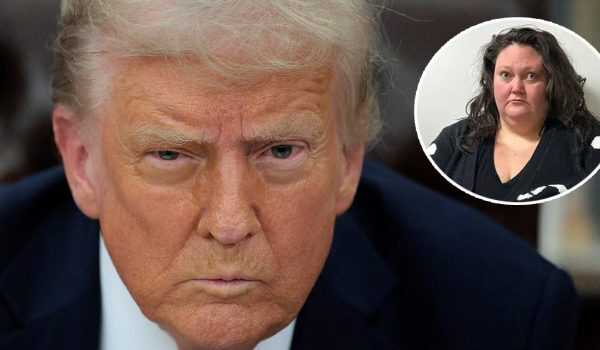
Legal experts note that this case highlights the delicate balance between First Amendment protections and laws designed to prevent threats or incitement to violence—especially when public officials are involved. As the investigation continues and prosecutors review the evidence, the case serves as a reminder that statements made online can carry serious legal consequences when they are perceived as crossing into threats.
For now, authorities say their focus remains on public safety, while the courts will ultimately determine how the law applies in this situation.