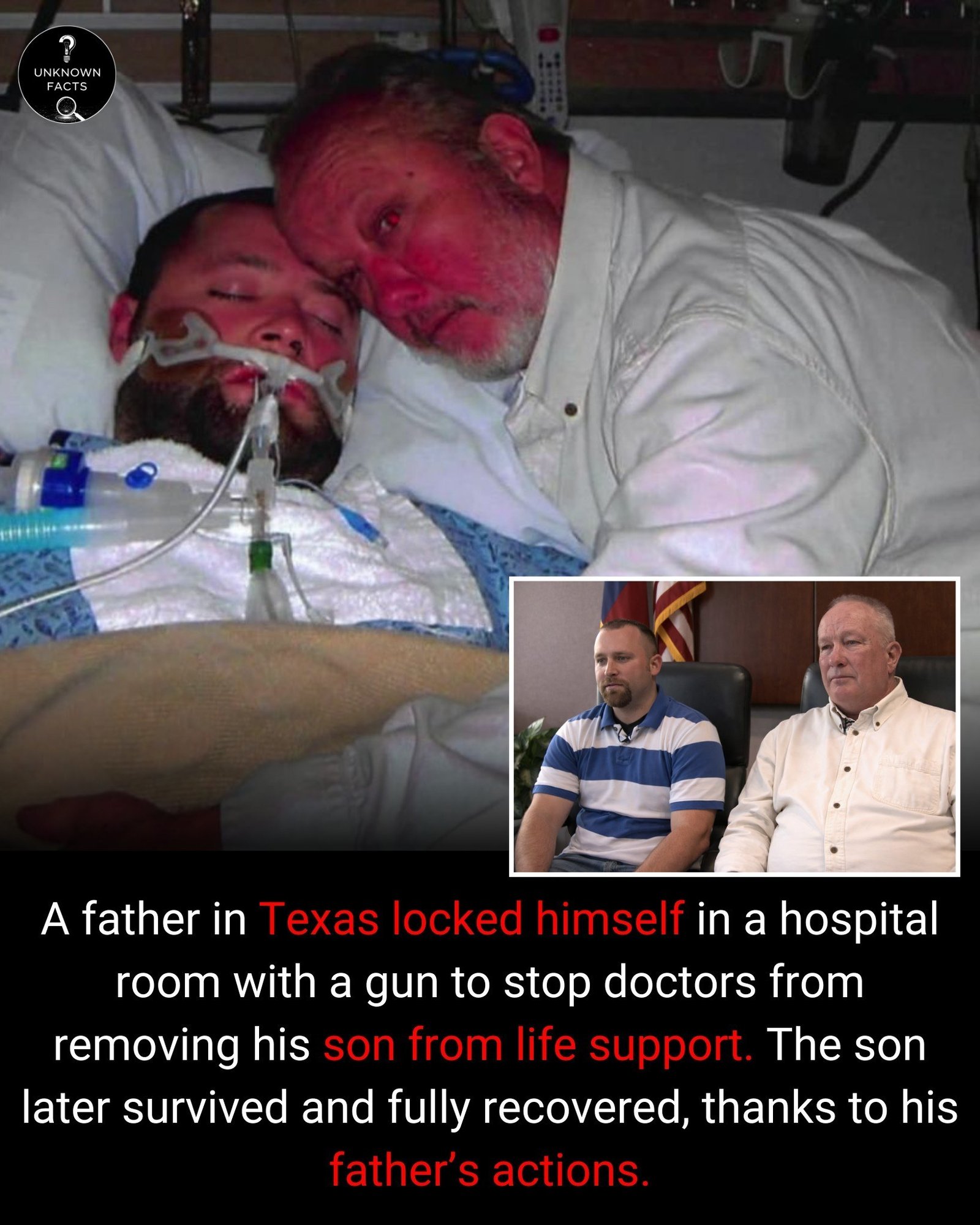

At the start of 2015, George Pic, a man living in Texas, found himself at the center of an unexpected situation….
Hospitals are designed to operate on order, precision, and established protocol, especially when life-and-death decisions must be made. In one extraordinary case, that certainty fractured when George Pickering II was told that his teenage son had suffered catastrophic brain damage and met the criteria for brain death.
Doctors believed recovery was impossible and began moving toward end-of-life procedures, including discussions about withdrawing life support—steps that reflect standard medical practice when brain death is diagnosed.
Pickering, however, refused to accept the conclusion. Overwhelmed by fear and disbelief, he insisted his son was still alive in ways medical tests failed to capture. As hospital staff prepared to proceed, Pickering’s resistance escalated into a crisis when he brought a firearm into the hospital room, triggering lockdowns, evacuations, and a police standoff. The act placed patients, staff, and first responders in immediate danger, transforming a medical dispute into a public safety emergency.

During tense negotiations, unexpected developments emerged. Pickering claimed his son showed signs of awareness, and subtle movements were observed that could not be dismissed as reflexive. Doctors halted the process and ordered further testing. The reassessment led to a stunning reversal: the original diagnosis was wrong. The teenager was not brain-dead, and life—fragile but present—remained. Eventually, he recovered enough to leave the hospital, fundamentally altering the medical narrative.

The legal outcome, however, followed a different path. Pickering was arrested, charged, and ultimately convicted for his actions during the armed standoff. In court, the focus was not on whether his instincts proved correct, but on the danger his conduct posed to others. The law weighed risk and precedent over outcome, reinforcing that life saved does not retroactively justify violent or unlawful behavior.

The case endures because it resists simple judgment. It exposes the fallibility of even the most advanced medical systems while underscoring the necessity of restraint and lawful process. Neither medical authority nor parental instinct emerges unchallenged. Instead, the story stands as a sobering reminder that irreversible decisions demand humility, caution, and communication—especially when certainty proves more fragile than anyone expects.